

Day and Evening Guests Without Two Wedding Websites
Day guests stay for everything. Evening guests arrive for drinks and dancing. Here is how UK couples brief both groups clearly on one wedding website — without two guest lists, two WhatsApp chats, or a second site.

Written by
Guestlive Editorial
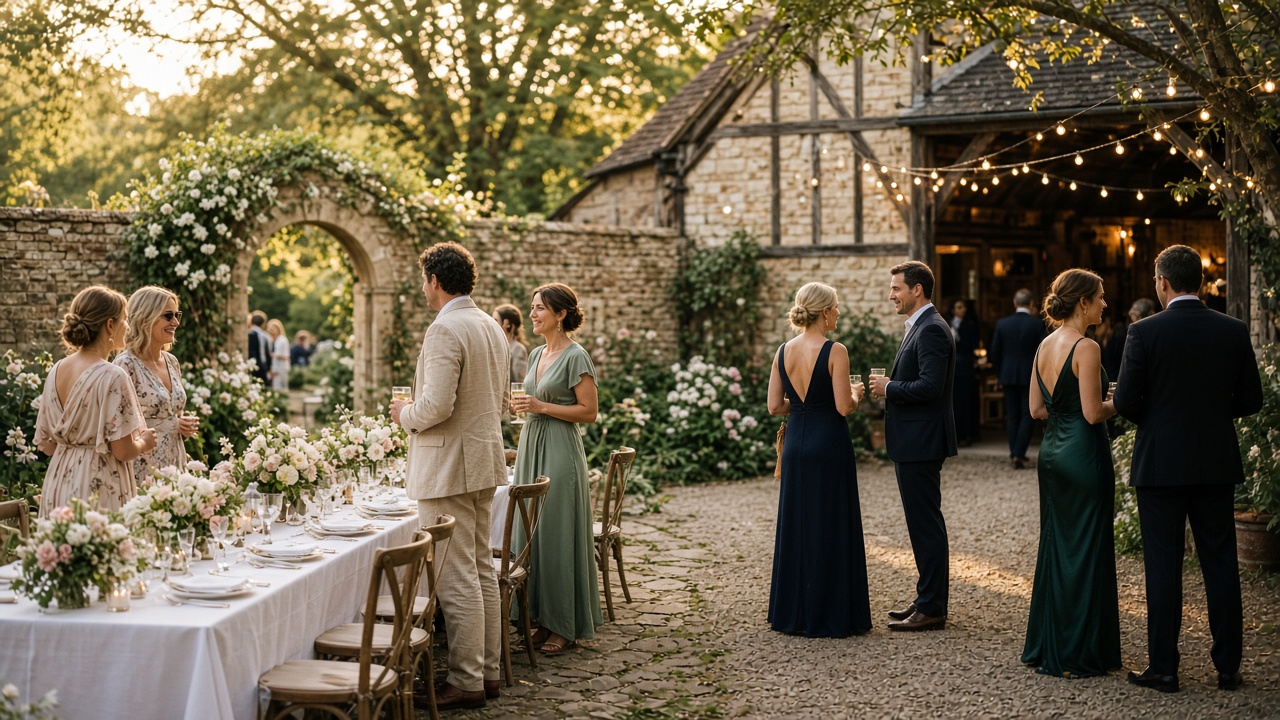
Most UK weddings have two guest groups, not one. Day guests are there for the ceremony, the meal and the speeches. Evening guests arrive later for drinks, cake and the dancefloor. That split is normal. What is not normal is building two websites, two WhatsApp groups and a spreadsheet nobody updates after May. One clear site — with the right message for each person — is enough.
Last updated: 9 September 2026
Jump to
- What “day” and “evening” actually mean
- One site, two invitations
- What each guest needs to see
- RSVPs, meals and plus-ones without chaos
- Arrival times, parking and dress code
- Photos, speeches and the evening switch
- Day-only vs one shared guest space
- A calmer place for both guest lists
- Frequently asked questions
What “day” and “evening” actually mean
At a UK wedding, “day guest” usually means invited to the ceremony and wedding breakfast. “Evening guest” means invited from a set time — often after speeches, for dancing, cake or a later buffet. Venues and caterers plan covers around that split. Guests feel it as a social line: who sits for the meal, who walks in when the room opens up.
The etiquette problem is not the split. It is unclear wording. Evening guests who think they are missing the vows get offended. Day guests who assume everyone stays all day get crowded dancefloors and confused seating plans. Put the difference in writing early — on the invite and on the site — so nobody has to guess from a Facebook comment.
You do not need a second brand or a second URL. You need one private place that says who is invited to what, what time to arrive, and where to put photos afterwards.
One site, two invitations
Print and digital work together. Stationery carries the formal invite. The website carries the details that change: maps, timings, menu choices, song requests, the gallery link.
Use the same site for both groups. Change what each person is asked to do:
- Day guests: ceremony time, breakfast seating note, meal choice, full itinerary.
- Evening guests: arrival window, dress code, parking for the later slot, a clear “you are invited from X onwards”.
Do not make evening guests dig through a day schedule to find their one line. Put “Evening guests” as its own short section near the top of the page, or send them the same link with a short cover note that names their arrival time.
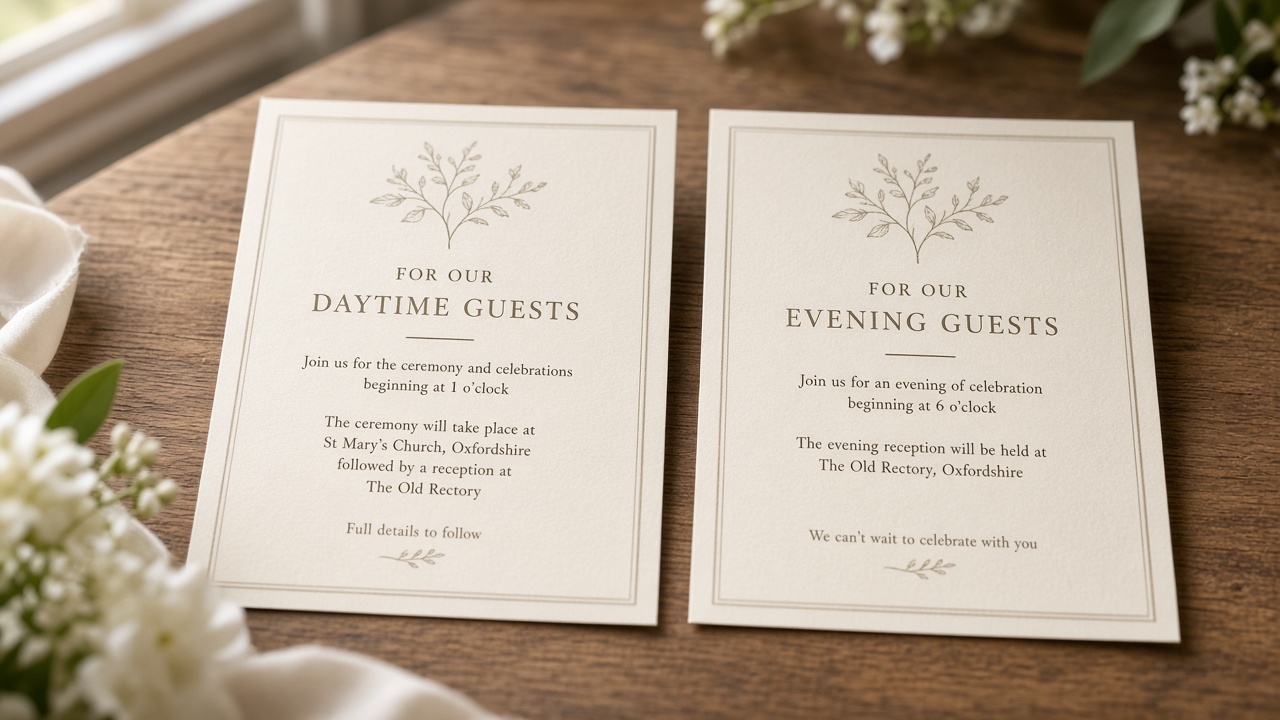
A kind line on the evening card:
We would love you to join us from 7pm for drinks, cake and dancing at [venue]. Full details and parking are on our wedding page.
A kind line for day guests:
You are invited for the whole day — ceremony, wedding breakfast and evening celebrations. Please reply with your meal choice by [date].
That is the whole distinction most people need.
What each guest needs to see
Both groups need the couple names, date, venue address, gift preference and a way to contact you. Day guests also need ceremony doors-open time, order-of-service notes, and meal deadlines. Evening guests need a hard arrival window, whether food will still be available, and whether children are welcome later.
Useful sections on one page:
- Welcome and date
- Day guest schedule
- Evening guest arrival
- Travel, parking and taxis
- Dress code
- Meal choices (day only, or evening buffet if you have one)
- Photos and messages — one gallery for everyone
- FAQs
Hide or skip features you do not need. If you are not collecting song requests, do not show an empty playlist box. Guests skim; empty modules look like broken pages.
RSVPs, meals and plus-ones without chaos
Track RSVPs by invitation type. A day-guest “yes” is not the same as an evening “yes” for the caterer. Your seating plan and bar numbers depend on that split staying clean.
Practical rules that save arguments:
- State the reply deadline once, in the same place for both groups.
- Collect meal choices only from people eating the wedding breakfast.
- If evening guests get a later buffet, say so — and say if they need to RSVP for food.
- Plus-ones: name them on the invite. “And guest” on an evening invite still needs a headcount.
- Children: say whether the evening is adult-only. Ambiguity here creates the most awkward doorstep conversations.
If someone asks to stay for dinner who was only invited for the evening, answer privately. Do not renegotiate guest lists in a public comment thread.
Arrival times, parking and dress code
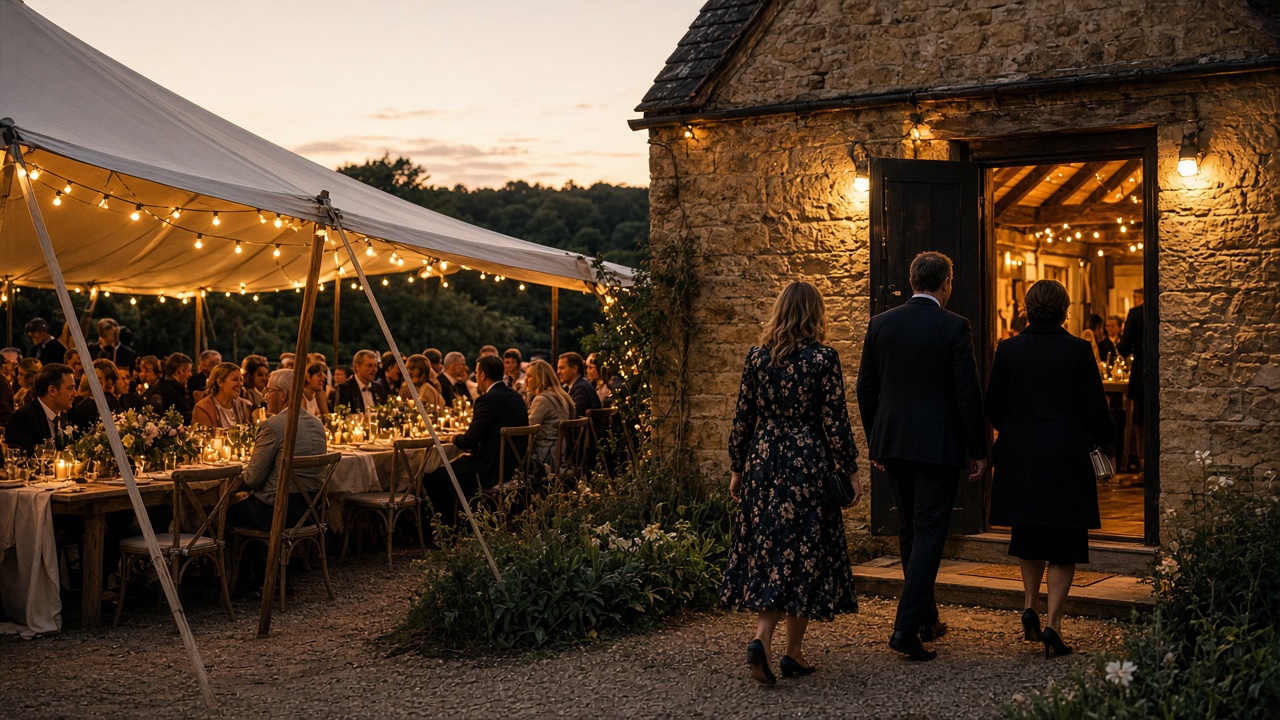
Evening guests often arrive while speeches are finishing or just after. Give them a window, not a vague “later”. “From 7pm” is clearer than “for the evening do”. Add a sentence if the room is closed until a certain time so people are not left in the car park.
Parking and taxis change after dark. Link the same map, then add one evening-specific note: last trains, venue postcode for Uber, whether the field car park is lit. Dress code should match what you said on the card — cocktail, black tie optional, or “smart, and bring a jacket for the courtyard”.
Photos, speeches and the evening switch
Day guests take most of the afternoon candids. Evening guests catch the dancefloor and the late hugs. You still want one album, not two camera-roll scavenger hunts.
Keep ceremony rules separate from reception sharing. If you want phones down for the vows, say so for day guests — then invite photos again once drinks start. A guide to that handoff lives here: how to run an unplugged ceremony and still get guest photos. For a screen that updates as people upload after speeches, see how to run a live photo wall at a UK wedding reception.
Put the same gallery link on both the day and evening cards. Evening arrivals should not need a different app or a second QR. Guests who will not download anything for one night still open a camera scan — that is why no-app photo collection works at UK receptions. Plenty of pictures still arrive after the last train; when guests actually upload is rarely only on the night.
Speeches sit in the day half for most couples. Evening guests do not need a full transcript. One line — “speeches after the wedding breakfast; evening guests from 7pm” — stops people walking into a quiet room mid-toast.
Day-only vs one shared guest space
| Invites | Two URLs to print, text and remember | One link; wording differs by guest type |
|---|---|---|
| Updates | Change travel twice when the taxi firm changes | Edit once; both groups see it |
| Photos | Day and evening end up in different folders | One gallery for the whole celebration |
| Risk | Evening guests feel like an afterthought on a thinner page | You must label sections clearly so nobody misreads their invite |
| Best for | Almost nobody, once the stationery is printed | Nearly every UK wedding with a day / evening split |
| Verdict | Extra admin for little gain | The calmer default |
The shared site is not “treating everyone the same”. It is treating the information as one event with two arrival times.
A calmer place for both guest lists
You want one private link guests can open in the phone browser — schedule, RSVP, meal choices if you need them, and a gallery that stays open after the weekend. No second site for evening people. No asking anyone to download an app for a single Saturday.
GuestLive is built for that. Couples set up one event page, turn features on or off, and share a QR or private link. Day guests can RSVP and add photos; evening guests can arrive later and still land in the same gallery. It is £29 once, with no guest app, and galleries do not expire — so the cousin who uploads on Tuesday still finds the right album.
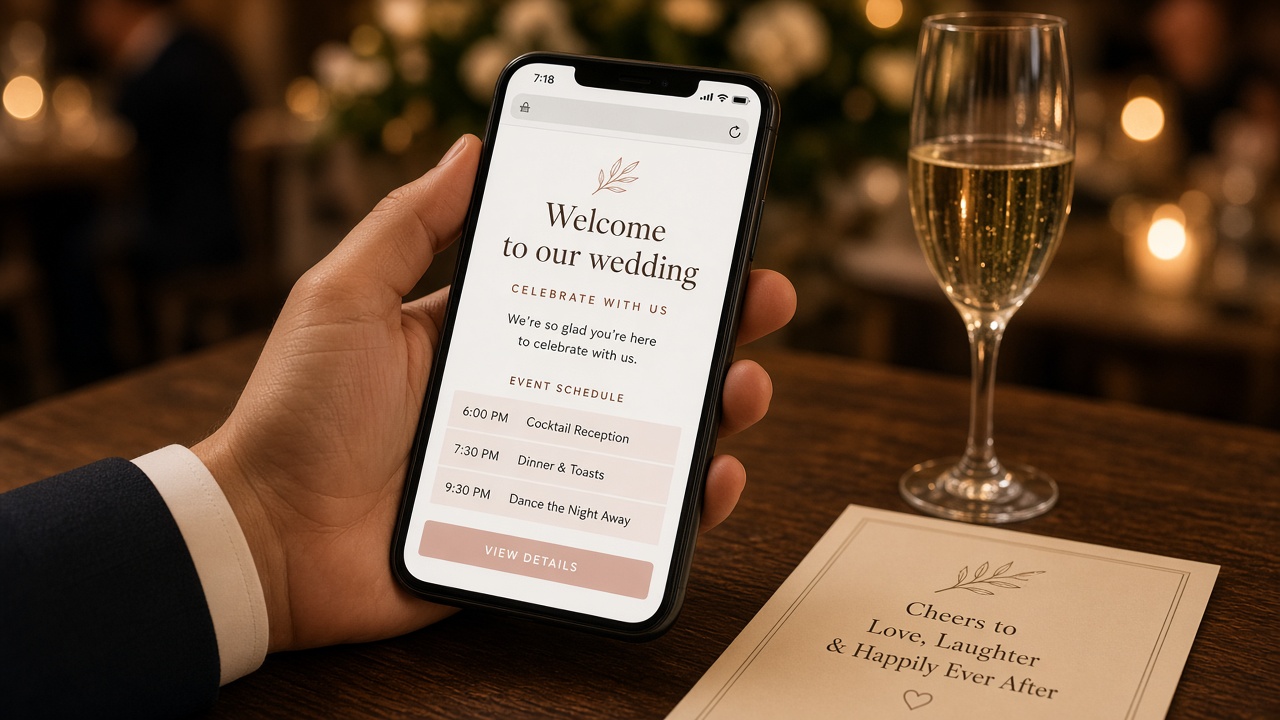
Use the site to remove ambiguity, not to add another channel. Print the invite. Point both guest lists at the same page. Say who is invited to what in one sentence each.
Frequently asked questions
Do evening guests need a different wedding website?
No. They need a clear arrival time and the same practical details — map, dress code, parking — on the page you already have. A second site usually means stale information.
How do we word the evening invite kindly?
Say what they are invited to and from when. “Please join us from 7pm for drinks, cake and dancing” is warmer and clearer than “evening only” with no time.
Should day and evening guests share one photo gallery?
Yes, unless you have a strong privacy reason to split them. One gallery means the dancefloor shots and the lawn candids live together, and you moderate in one place.
What if an evening guest asks to come to the meal?
Answer privately. Your caterer and seating plan are fixed around the day list. A kind no is better than a public maybe.
Can we hide meal choices from evening guests?
Yes. Only show RSVP fields that apply to that person. Empty meal forms for evening guests create confusion and fake dietary answers.
When should we send the website link?
With the invitations, or as soon as the page has date, venue and RSVP. Update timings later if you need to — one link stays current for both groups.
Day and evening guests are two invitations, not two weddings. Put both on one clear site, label the arrival times, keep the gallery shared, and stop maintaining a second URL nobody bookmarks. That is how UK couples keep the day list and the evening list on the same page without the admin sprawl.
Ready to start your own celebration?
Set up your event in minutes and start collecting memories with GuestLive.
Create Your Event Today with GuestLiveTags
Join the conversation
Comments are coming soon. Have feedback? Email us at hello@guestlive.co.uk